
gentle-ai Adds First-Class Hermes Integration, Langfuse Monitoring Fixed
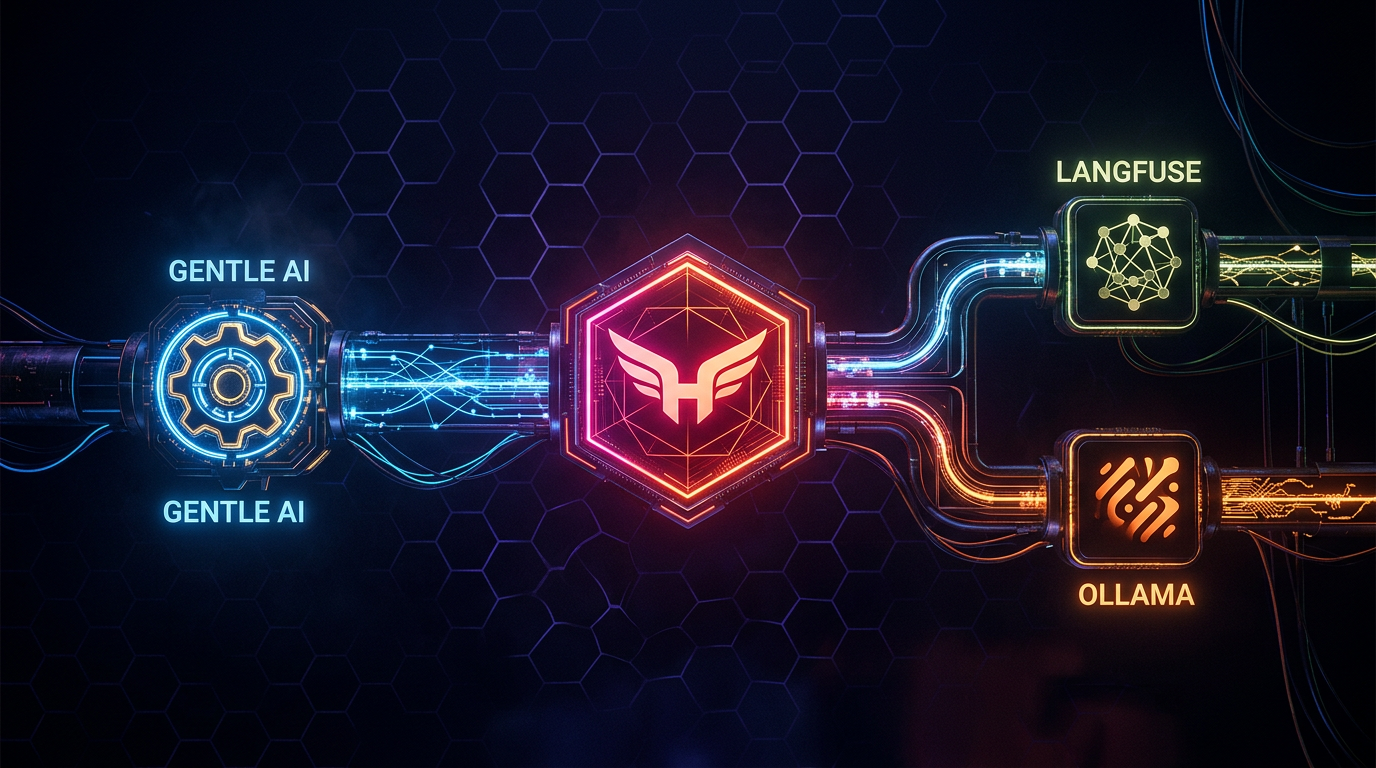
gentle-ai v1.37.0 shipped with first-class Hermes Agent integration - detection, adapter registration, factory wiring, catalog entries, config-scan, and CLI support from the first commit. A full first-class integration. @G_Programming describes it as "full integration, not half-baked support."
gentle-ai is a Go-based agent installer and manager with 4K GitHub stars. It previously supported Claude Code, OpenCode, Codex CLI, Pi, and OpenClaw. Adding Hermes gives users a single gentle-ai install --agent hermes command that provisions the full stack - agent binary, configuration, skills, and provider setup. The integration includes detection of existing Hermes installations, adapter registration, and catalog entries so Hermes appears alongside the other agents in gentle-ai's TUI picker and CLI commands. Users can now install and manage Hermes alongside their other coding agents from one tool.
The same day, a community contributor fixed a persistent Langfuse monitoring bug in Hermes Agent's bundled plugin. PR #40560, merged by @kamonspecial, restores token usage and cost tracking for gateway turns. The root cause: on_post_llm_call extracted usage from the wrong object path. post_api_request passed a sanitized dict (no .usage attribute) plus a separate usage dict, but the extraction code was checking getattr(response, "usage") - always None on a dict. The fix re-routes the extraction to the dedicated usage dict, restoring cost visibility in Langfuse traces.
@LangfuseJP reported the merge on X: "Langfuse token bug in Hermes agent - submitted PR merged to main. If affected, wait for next release." The tweet pulled 112 impressions and 14 total engagements, suggesting Langfuse users were watching this one.
On the desktop side, two features landed that close key gaps. PR #40559 lets the Electron desktop app run tool backend post-setup install hooks directly from the GUI. Previously the panel could enable/disable tools, select providers, and manage API keys - but for one-time install hooks it told the user to run hermes tools from the terminal. Now the GUI has full parity. PR #42634 fixes the #1 friction point for remote desktop users: file attachments (@file: CSVs, PDFs, logs) now work when connected to a remote gateway. Before, client-side paths were invisible to the gateway, so context_references rejected them. The fix uploads file content to the gateway, resolving what the PR calls "the #1 friction point for remote desktop users."
Community conversation on X was broad. @imehbryant celebrated Ollama availability on Hermes Desktop: "That was honestly the one thing I was hoping for to try out Hermes Desktop." @mr_r0b0t noted an email about easier local model setup. Local model support has been a recurring request - users want to run Hermes with models like Llama, Qwen, and DeepSeek locally without routing through cloud APIs. Ollama integration means users can point Hermes Desktop at a local Ollama instance and use any model in their Ollama library as a provider.
@libapi_ described a parallel agent workflow - Hermes, Codex, and Claude Code running concurrently on the same problem, each handling a different task: "one writes code, one researches, one runs tools, one verifies." This reflects a shift from single-agent sessions to multi-agent orchestration. @stellarprtcol posted an Indonesian-language explainer on SOUL.md, the file that defines an agent's personality, voice, and decision-making rules in Hermes's system prompt.
The consistent pattern across these updates: Hermes is no longer a standalone tool. It is becoming a target for other installers, a component in multi-agent workflows, and a platform that community contributors fix and extend directly.