
Hermes Agent Ships Built-In MCP Catalog With Curated Server Registry
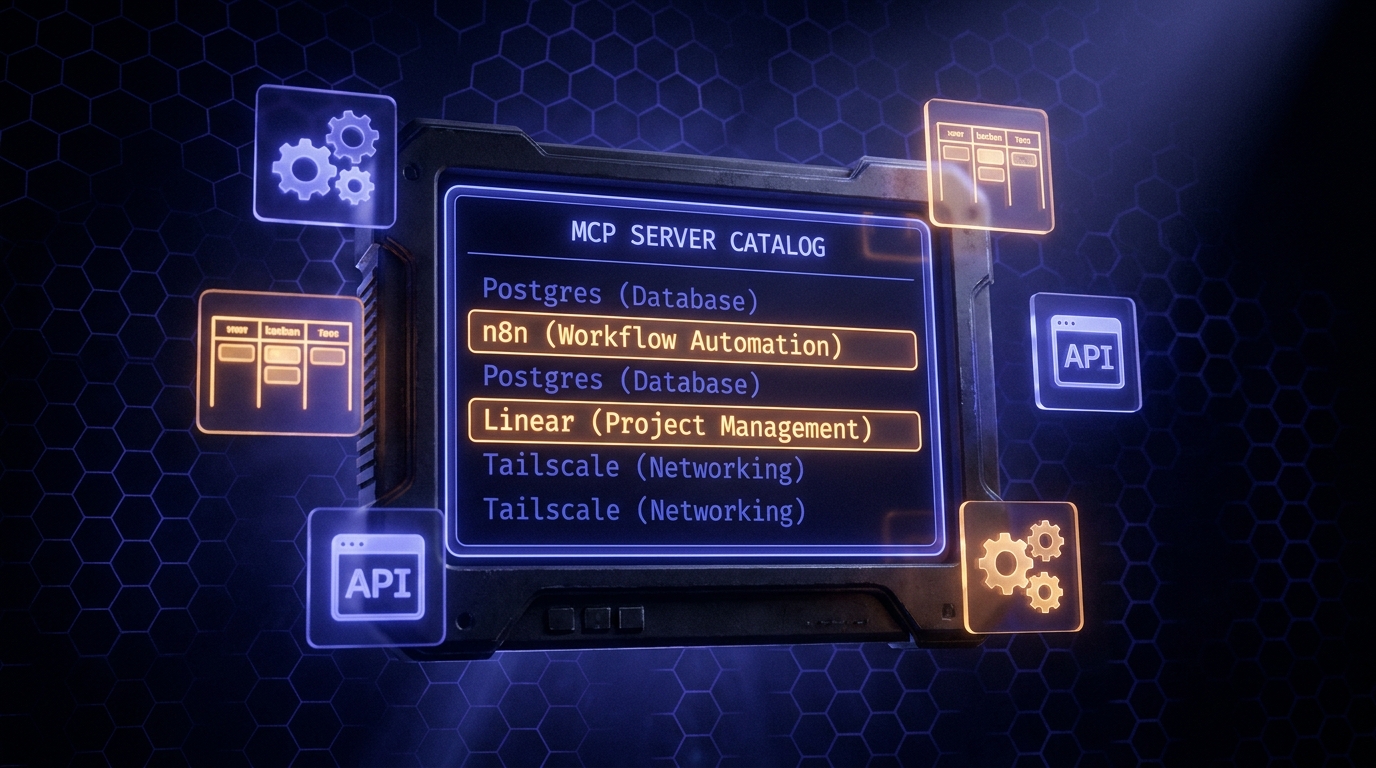
Hermes Agent now ships with a built-in MCP Catalog that registers pre-vetted Model Context Protocol servers directly from the CLI. Announced by Nous Research on May 27, the catalog removes the manual configuration step that previously required users to locate, verify, and wire up MCP servers themselves. Instead, hermes mcp install <name> handles discovery, authentication, and tool filtering in a single command.
What MCP brings to agent tooling
The Model Context Protocol (MCP), originally introduced by Anthropic, defines a standard for how AI agents connect to external tools and data sources. Before the catalog, adding an MCP server to Hermes Agent meant finding the server endpoint, configuring authentication credentials, and manually listing which tools to expose. Each integration required its own research step.
The catalog replaces that with a curated registry. Nous Research vets each entry before listing it. When a user installs a catalog entry, Hermes Agent clones or connects to the server, sets up the prescribed authentication flow, and applies a pre-configured tool allowlist - exposing only the subset of tools that Nous has reviewed.
Two initial catalog entries
At launch, the catalog includes two entries:
| Entry | Type | Auth | Tools |
|---|---|---|---|
| n8n | Local workflow automation | Git clone + API key | 8 (read-mostly) |
| Linear | Remote project management | HTTP + OAuth | pre-filtered allowlist |
The n8n entry provides read-mostly access to local workflow automation. The Linear entry handles project management over HTTP with OAuth-based authentication. Both ship with pre-filtered tool allowlists, so the agent sees only the subset of operations Nous has reviewed.
CLI interface
Three commands drive the catalog workflow:
hermes mcpopens an interactive picker showing all available catalog entries with descriptions.hermes mcp catalogoutputs the same data as plain text, suitable for scripting or piping into other tools.hermes mcp install <name>installs a catalog entry by its identifier, automatically handling the git clone (for local servers), credential prompts, and tool registration.
After installation, the server's tools appear alongside Hermes Agent's native tools. No manual config file edits required.
Why a curated catalog matters
Three reasons this approach differs from a generic MCP marketplace:
First, trust. Every entry in the catalog has been reviewed by Nous Research. The tool allowlists are pre-configured to expose only safe operations. Users do not need to audit a third-party MCP server's full tool surface before connecting.
Second, friction elimination. The MCP ecosystem has grown quickly, with servers available for everything from GitHub to Postgres to browser automation. But setup friction - cloning repositories, reading configuration docs, finding the right authentication flow - has been a bottleneck. The catalog collapses that into a single command.
Third, protocol adoption. By building the catalog into Hermes Agent's native tooling rather than as a plugin, Nous treats MCP as a first-class integration target. This signals that future Hermes Agent features will likely ship MCP-aware from day one.
[^1]: Nous Research. "Hermes Agent now has a built-in MCP Catalog." X. May 27, 2026. [^2]: Teknium. "MCP Catalog in Hermes Agent now to have preconfigured already available MCP's from trusted sources." X. May 27, 2026.
What early adopters are doing
The same day the catalog shipped, developer David Bayendor described directing his Hermes Agent to audit his daily workflows and identify CLI tools that could be replaced with catalog MCP equivalents. The immediate result: GitHub CLI was swapped for GitHub MCP, gaining the same capabilities with cleaner JSON responses and fewer subprocess calls.
This pattern - audit existing tool paths, find catalog equivalents, swap - is one the catalog is explicitly designed to enable. As the registry grows beyond the initial two entries, the surface area of replaceable workflows expands.
The catalog's launch metrics suggest strong demand. The announcement tweet reached 1.7 million impressions and was bookmarked over 1,000 times in under 24 hours, indicating users are saving it for future reference rather than just scrolling past.